Mānawatia ā Matariki mā Puanga ✨✨✨✨✨✨✨✨✨
As we reflect on the past year and look ahead, Matariki reminds us of the strength that comes from working together. This year has been a busy one, with communities across the Wellington Region facing severe weather, flooding, strong winds and heavy swells. Through it all, we've worked alongside councils, iwi, emergency services and local agencies and communities to support responses and strengthen preparedness for the future.
A heartfelt thank you to the Community Emergency Hub champions who opened hubs, to the Marae whānau who continue to provide manaakitanga and practical support, and to everyone who stepped up to help their neighbours when it mattered most.
For the year ahead, our focus remains on building stronger partnerships and enabling our communities to be safer and more resilient.
From all of us, we want to wish you and your whānau a safe, restful and happy Matariki mā Puanga.
Kaumātua Resilience on the Kāpiti Coast
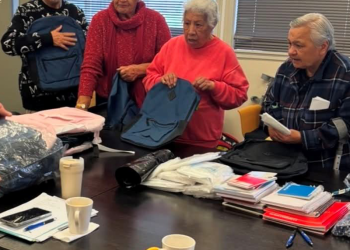
A recent resilience session on the Kāpiti Coast brought together kaumātua from the local Toi Ora Kaumātua group together for a discussion on emergency preparedness.
The event was hosted by Hora Te Pai Health, which provides regular culturally safe environments for Kaumātua to connect, celebrate wellbeing and participate in activities together. This session, sponsored by KCDC and supported by WREMO, focused on evacuating quickly in an emergency.
With heaters on full blast, there was lots of kōrero, kai, and shared knowledge. The session covered what to include in a grab bag, how to tailor it to individual needs, and the importance of having essential items ready to go, including taonga. There was also a focus on considerations for kaumātua, such as keeping a record of medications, planning for mobility needs, and staying connected with whānau.
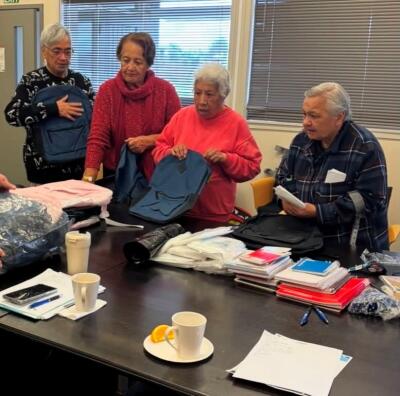
Toi Ora Kaumātua Group by Hora Te Pai Health, June 2026
Participants were shown three types of grab-and-go bags: a store-bought option, a simple bedside version, and a packed to the brim bag belonging to their WREMO emergency management advisor, Renee Santos.
Feedback from participants was really positive, Kaumātua said they left with a better understanding and were happy they could choose a few key items to begin building their own.
Thank you for your feedback – Wellington Region CDEM Group Plan launched
The Wellington Region Civil Defence Emergency Management (CDEM) Group Plan 2026–2031 is now live! This sets a shared direction for how we prepare for, respond to, and recover from emergencies.
The plan recognises a key challenge – natural hazards are increasing in scale and complexity, placing pressure on current systems. “Right now, we know the system can be stretched by large, sustained events,” says Mayor Anita Baker, Chair of the Wellington Region CDEM Group Joint Committee.
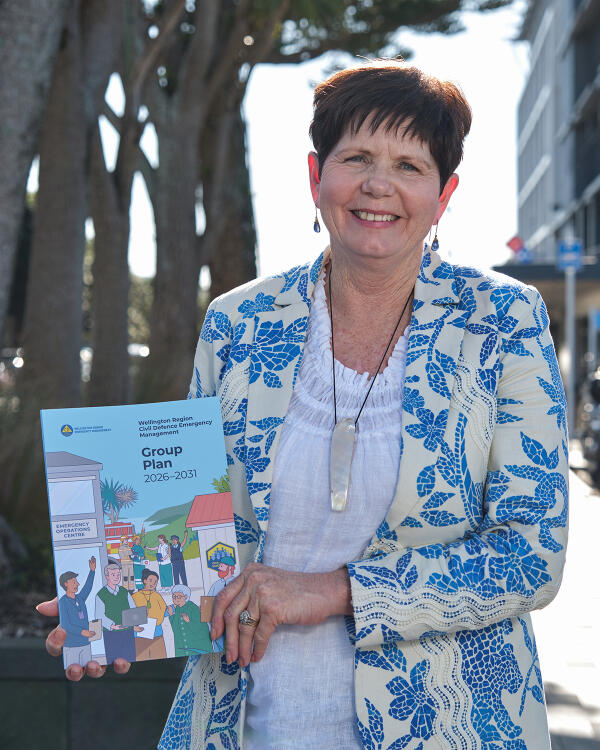 Developed with councils, emergency services, iwi, and community organisations, the plan reflects a collective effort to strengthen how the region works together. Recent analysis shows Wellington faces high risks from earthquakes, tsunami, and severe weather, and while strong progress has been made, gaps remain in coordination, logistics, and community readiness.
A key shift is a stronger focus on communities. Emergency management is seen as a shared responsibility, supporting whānau and communities to play an active role alongside agencies. The plan also focuses on what matters most for people - quicker decision-making, less disruption, and better support for those most affected.
Thanks again to the communities whose feedback helped shape the plan, ensuring it reflects real experiences and local strengths.
Get together – get through
Community resilience: how Wellington South's unity shaped post-flood recovery efforts
Wellington South has always been a place of manaakitanga – where community comes first and people do things their own way. On April 20, that spirit was tested as floodwaters lifted cars onto fences, forced people onto wardrobes, and cut through entire streets. Yet in the face of it, something even stronger emerged: neighbours rescuing neighbours, people digging out homes that weren’t their own, and communities moving faster than any formal response could.
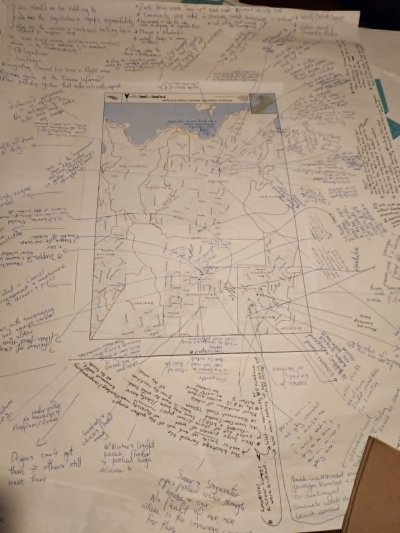
Community Map – Wellington South, April 2026
This response didn’t happen by chance – it was built on relationships, growing networks, and groundwork laid beforehand. When the floods came, those connections activated quickly and new ones were built. Social media groups became real-time coordination hubs, schools transformed into childcare and support centres, and local community spaces became safe places for shelter, food, problem-solving, and care. Across Berhampore, Island Bay, Owhiro Bay, Vogelmorn, and Newtown, people didn’t wait to be told what to do – they stepped forward together, leading with instinct, generosity, and deep local knowledge.
In the weeks that followed, the community continued to lead. At the first community led debrief Hui people wrote their experiences, traced flood paths, talked about the kōura across streets and added to each other’s stories on neighbourhood maps laid out across tables. These story maps and neighbourhood meetings turned lived experiences into a collective voice – revealing not just what happened, but what mattered next: clearer systems, better understanding of the Catchments, and a more human-centred recovery. These insights are now shaping real decisions, influencing infrastructure planning and future resilience efforts. More than a response, this has become a powerful example of what’s possible when communities are connected, trusted, and enabled to lead their own recovery.
Connected communities
Across the region, communities have responded quickly and generously to significant severe weather events impacting our communities. Some Community Emergency Hubs opened their doors in case people needed to evacuate or to provide overall community support. Marae opened their doors to provide manaakitanga and shelter; and residents checked on each other using social media groups to share information, offer help and coordinate accommodation.
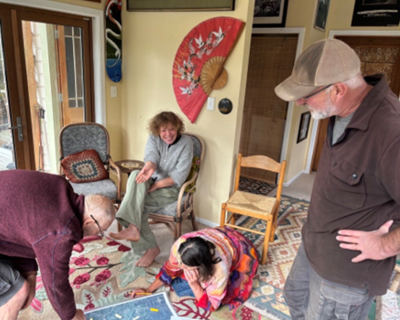
Mangatārere Response Planning, February 2026
This was especially evident in Wairarapa, where communities faced a second severe weather event in just 12 weeks. Despite flooding, slips, road closures and power outages, neighbours supported one another and local response plans were put into action. Alison from Mangatārere Valley commented that their local community response planning really paid off. A community WhatsApp group, established as one part of their response planning, became an important way for residents to offer assistance to those who were cut off or at risk of evacuation.
The Mangatārere community response was one of many examples of how personal preparedness, trusted local connections and community response planning can make a real difference when severe weather affects the region.
Be ready to throw, grab and go!
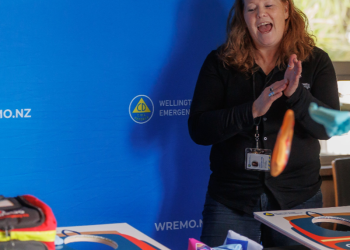
Our new cornhole game was a huge hit at the Te Papa Tectonic Trail, with plenty of friendly competition and great conversations about emergency preparedness.
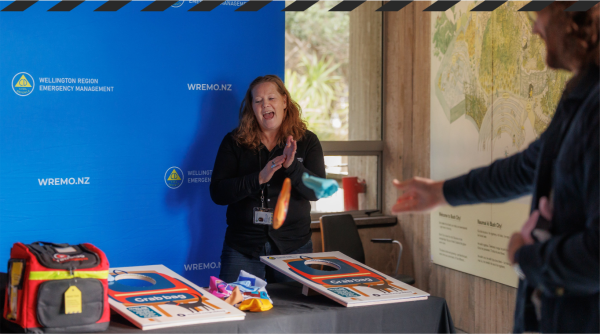
Credit: Jo Moore Photography
One of the key messages we shared was the importance of having a grab bag (also known as a getaway kit). A grab bag is a small backpack packed with the essentials you'll need if you have to leave home or work quickly during an emergency.
Whether you're evacuating after an earthquake, flood, or another unexpected event, having a grab bag ready means you can focus on getting yourself and your whānau to safety, knowing your basic supplies are already packed. It's especially helpful if you need to walk some distance to reach a safe place or get home.
If you haven't packed yours yet, now is a great time to get started. Your future self will thank you!
Read, watch and understand
This April marked the 58th anniversary of the Wahine Disaster, one of New Zealand's most significant natural hazard emergencies.
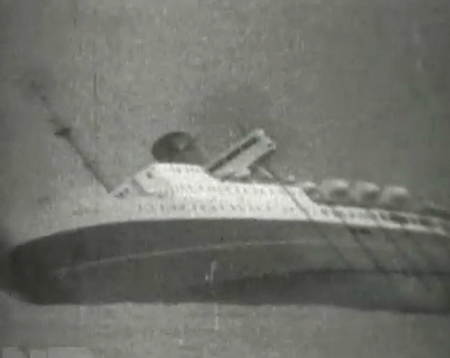 On 10 April 1968, the interisland ferry Wahine encountered extreme weather as it entered Wellington Harbour. The tragedy claimed 53 lives and remains a powerful reminder of how quickly conditions can change and the importance of clear communication and communities supporting one another during emergencies.
As we reflect on this event, we acknowledge those who lost their lives, the survivors, rescuers and everyone whose lives were forever changed. Their experiences continue to shape emergency management in Aotearoa and remind us of the value of being prepared for whatever comes our way.
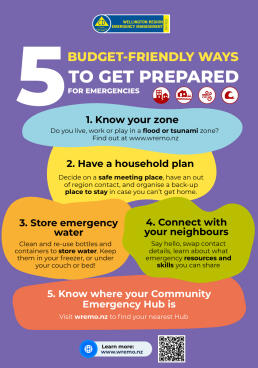
Preparedness on a budget
Being prepared does not have to be expensive. Start with what you already have, focus on the most likely local hazards, and build up your supplies a little at a time.